
Not Yet Federalism for South Sudan
By Deng Lueth Yuang
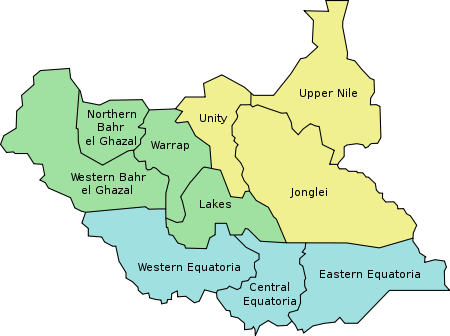
June 13, 2014(Nyamilepedia) — The Fallacy of South Sudan’s Quest for ‘good’ Governance Structure:
- Encouragement and promotion of tribal hatred
- Rise in intertribal and interregional conflicts
- Secessionist tendencies
- Entrenchment of big government and bureaucracy
Decentralization: States – counties- payams – bomas
- Rise of high level poverty; further marginalization of the minorities
- Sugar-coating and applying ‘cosmetic surgery’ to internal real causes of south Sudan problems
- ‘Ulterior motives’ to fight alleged Dinka domination and obsession with leadership ‘Born-to-rule’ mentality
- South Sudan still facing so many problems that need collective leadership
- South Sudan is already a federal state though the name ‘Federal Republic’ is not initialized – need to clip presidential powers and define the way state and other local governments should deliver to the common people
- Confederation-like federation is a disaster for ALL South Sudanese interests
Yes, we are all South Sudanese. But we have different mothers and fathers, and above all we come from different tribes. 64 to be exact for now. We have lived in the southern region of the Sudan under the regime of Anglo-Egyptian and Khartoum Arab’s elites for centuries as one people with one origin – our Africanness. We have seen it all during the day, during the night and time of happiness and time of sadness. But today we are separate human beings, just because we have realized we are different people with different tribes, aspirations, loyalties, understanding of power and sharing of resources.
Let me come to this beast – Federalism. If it is the ONLY solution we are striving to, then we are not seriously addressing the issues affecting us. We are just treating the symptoms of the ‘disease’ ailing South Sudan. We are sugar-coating the real menace devouring our people in our country. The real enemy is not the governance structure to correct our deep seated problems. Federalism is a short cut way for a don’t carer tired of perennial situation to solve our many problems. Before South Sudan waged the war for secession and independence, we lived under the northern regime, and we were governed by people who were not related to us. We also lived in our villages under our traditional rulers be they chiefs, kings or elders. Did any one of us complain of misrule or domination by other tribes? Absolutely, no. We accepted to serve the master.
Let’s not imagine ‘the federalism we want’ is a good thing from the meaning of the word “go” just by looking at the countries which have adopted it. Federalism is different like the way different countries interpret ‘democracy’ in their respective countries. It is based on the immediate and long term needs and circumstances of the given population. However, my observation tells me that the proponents of federalism are looking for ‘federalism in its pure form – strong constitutional mandates to the states, and other lower levels of government.’ I do concur it is a good form of government better than none as many south Sudanese opinators have alluded to. They have indicated benefits outweigh the costs. Yes, it is true every form of governance structure has pros and cons. Let’s not be deluded that “federalism is democracy per se” while decentralization is a mockery to will of the people. The fact still remains that decentralization constitutes federalism while federalism is not ONLY decentralization. That is why many other South Sudanese argue that we already practise federalism. Again, let’s not imagine that once we get federal governance, we are more likely to be peaceful, prosperous, development conscious, and tribally insensitive to make South Sudan a successful state.
Please, let’s think over these questions below and have logical answers before I dissect the fallacy of South Sudan quest for federalism:
- Which form of federalism does South Sudan need – centralized vs decentralized; pure vs mixed/hybrid; Western or African?
- If federalism is causing jitters among certain people and communities, why don’t we improve the existing decentralised unitary structure?
- Why not, one state with more resources and powers devolved to the lower level units?
- The most important: Why are we not introducing proportional representation democracy within federalism at all levels of government?
- Why not, we amend the constitution to claw back the powers of the imperial president, if he is the problem?
- Why are we not getting rid of these old recycled leaders who every time put us at loggerhead with one another?
- Why are we rushing for something untested on our land, South Sudan?
- Is it justifiable, because of power and resources control?
- Why are we so obsessed with short term solutions to our chronic problems?
- Can it be a vicious cycle that the states demanded federalism; counties, payams, bomas and individuals will, in the future, also demand federalism?
Let me relive you through present day role models of federal governance. I will pick two at least from each continent to show how federalism in its pure form we S. Sudanese crave is a fallacy.
In North America, Canada and US are the two biggest federal democracies. If you look at the history of their coming into being, you will understand that ‘pure’ federalism comes with costs. In Canada, Quebec province has been an agitating kid looking for secession. There has also been numerous regionalism issues especially the Prairie Provinces or the western region where I currently live. The US also have had the same problems in the past where the southern states had tendencies to secede from the United States and form their own country. There have also been jurisdictional issues.
In Africa, we have seen Nigeria and South Africa exhibiting some of the symptoms of hurried federations. Nigeria is facing an internal strife between the two regions – the north and the south. Call it ‘clash of the civilizations’ between the forces of Boko Haram Islamic fundamentalists and the pro-western southern government. South Africa is a hell for its own people. A wide gap has been created by their ‘somehow federation’ they instituted. The country is nursing social stratification between the rich who are mainly the elite blacks, Asians and whites, and the poor majority who are black Africans. Our neighbour hosting our peace, Ethiopia claims to be a federation but it is undemocratic and the regions have no powers or privileges whatsoever to challenge the national government.
In Europe, federalism has given some regions more powers than the others. UK , for example, favours England and Wales as the most powerful entities in the UK federation. Seccessional tendencies are seen in Scotland which will vote for self-independence this September. Northern Ireland is another dangling kid kicking for survival in the English Union. Spain Basque, Catalan and are few examples.
In the Middle East or arab world, the kingdom of Saudi Arabia is autocratic, militaristic, undemocratic and monarchic. If you go to UAE, they are undemocratic, monarchic and autocratic.
In the South America, Argentina and Venezuela are two countries facing political and economic upheavals because of federalism. Argentina has become too big to manage. A lot of bureaucracy going on and hence very costly to manage. Venezuela is a federal state with no freedom for her own people.
In Asia, India is a big democracy on paper but the fruits of its federal structure has not helped more than 1.6 billion people where more than four-fifth live on less than dollar a day. It has not removed the caste system, bourgeoisie or few capital owners, and the kleptocratic leadership from running the affairs of the nation. Pakistan, another federacy, is in a state of quagmire. Al-Qaida, Taliban and Islamism are actively engaging the Pakistan government and recruiting home ground jihadists.
Those are a few highlights to shed light into the issues awaiting us ahead if we rush to force federalism as a better alternative to our current issues. Our current issues are not tribes but individuals; are not regions but leaders; are not power and resources but services and accountability; is not Dinkocracy but tribal mindsets or myths about tribe called Dinka; are not the presidential decrees but the nocuous constitution; is not the SPLA we know, but the bunches and scraps of warlords and militias; is not the rebellious murderer but presidential amnesty; are not the youths but the seniles; are not the innocent citizens but the money/power hungry men rebelling day in, day out, and the list goes on. The real long-lasting solution is finding solutions to all of these problems.
In Conclusion, we all need federalism but the timing is not right. It starts within our own families that we have rights, powers and privileges to ‘have and own things, do those things your own way and do them by your own.’ That is the essence of federacy. But if we rush it, it will be an exercise in futility, a ticking time bomb and a harsh lesson to learn, that America or Europe is not Africa. We have to be ‘federal’ in our own locality.
More articles on this topic:
- The Debate: Understanding Federalism, South Sudan Federalism or Decentralization? June 9, 2014 — By Dr. Richard K. Mulla.
- The Debate: Understanding Federalism, Through The Khartoum Peace Agreement June 9, 2014 — By Deng Elijah
- The Debate: ‘FEDERALISM A MUST FOR A VIABLE STATE” June 6, 2014 — By Gatmai Buom Ruot
- The Debate: Understanding Federalism Proposed Federal system for future South Sudan: Let us serialize it, June 9, 2014 — By Sindani Sebit
- The Debate: Understanding Federalism, Federalism sufficiently not confederacy, June 10, 2014 — By Deng Turuk Liem.
- The Debate: Understanding Federalism United Regions of South Sudan (Federal System), June 11, 2014 — By Rev Bafel Paul Gak Deng
The contributor is Deng Lueth Yuang, B.A. (Econs), M.A. (Bnkg/Fin).
Founder & CEO, CEFA, a public think tank on economics and financial issues. He lives in Calgary, Alberta, Canada.
 Nyamilepedia
6 comments for “The Debate: Understanding Federalism,”